Turnkey vs Traditional Construction: Which is Right for You?
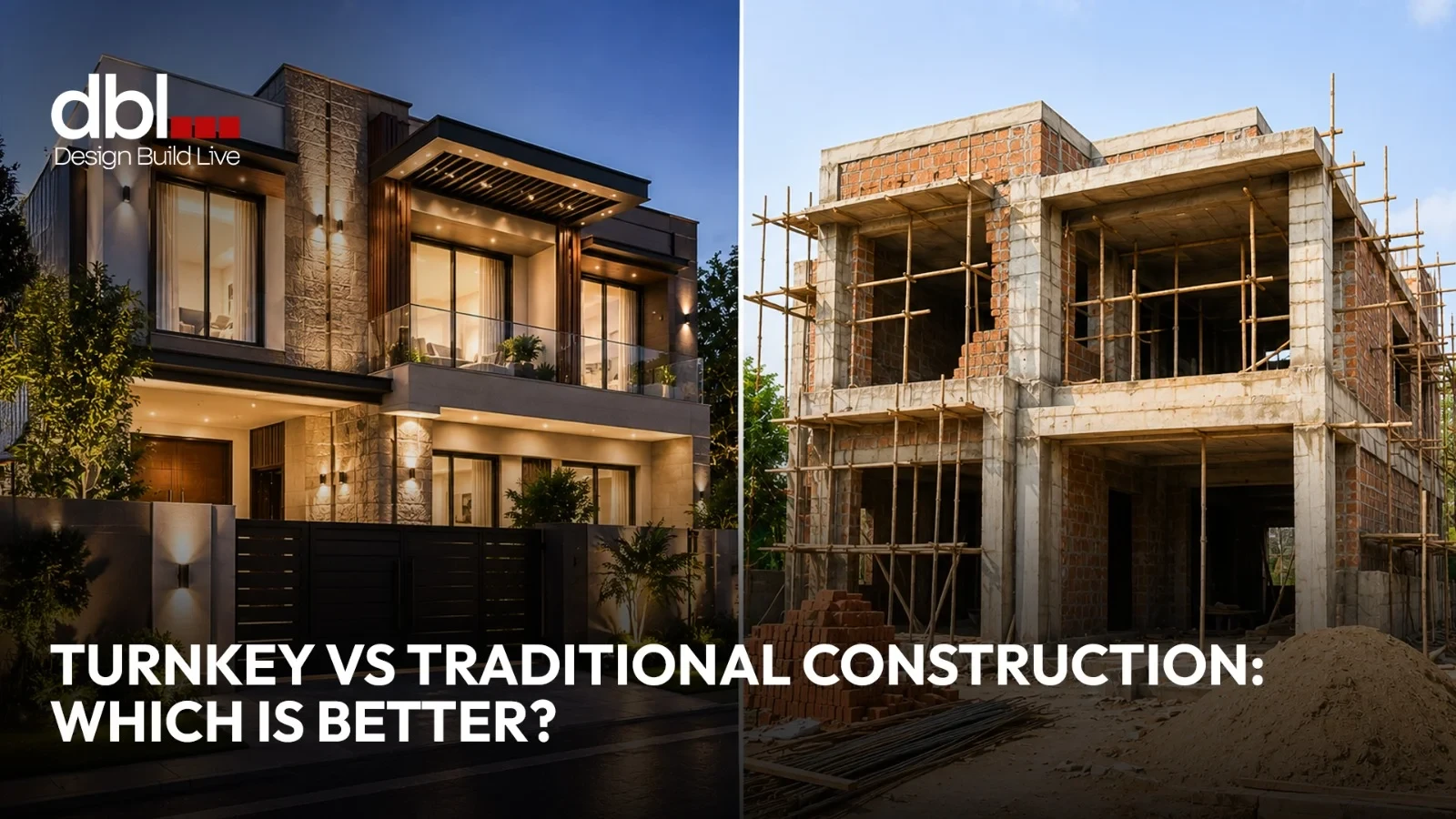
Imagine you bought a 10 marla plot in Bahria Town, and the contract has been signed.
Imagine you bought a 10 marla plot in Bahria Town, and the contract has been signed. You are almost out of money, but your imagination is still limitless. It is time to build the house!
Now, how are you going to do it? Will you hand over the future house to one contractor and not look back? Or will you decide to learn every possible thing on the go, hire a separate architect, hunt for masons in Raiwind, and personally ensure that every sack of cement is delivered?
So, your next months are now dependent on whether you choose turnkey construction or go the traditional route. We have observed our clients taking both these roads in Rawalpindi and Islamabad.
What is the right choice for you then? Let’s look at things from all angles.
A turnkey construction project is precisely what it suggests to be. One firm completes each process, including:
You are required to just enter, reside, and the work is done.
In Pakistan, a turnkey construction company would quote a fixed amount per square foot, and this cost would include both the grey structure and the finishing, meaning no urgent midnight calls concerning a lack of cement. Also, no follow-up on the electrician for three consecutive weeks would be needed.
When talking about traditional construction in Pakistan, it generally means that you engage a contractor or thekedar on a labour rate, purchase the materials, and supervise on site daily either by yourself or someone whom you trust.
You’ll be dealing with the mason, steel fixer, tile fixer, painter, etc. Daily, you’ll be visiting the local market to purchase bricks, sariya, and sanitary fittings. You would be the one with control, but also with the headache.
Have you heard a broad range of numbers from your contractor, who built his house in 2019, and still has a cemented brick price of Pkr 650? Forget about it. Here’s what you can expect from construction costs in Pakistan in 2026.
Construction costs have moved sharply over the last 18 months. Steel rebar, imported fittings, and skilled labour have all climbed.
| Construction Type | Grey Structure Only | Standard Finish | Premium Finish | Luxury Finish |
|---|---|---|---|---|
| Traditional | PKR 2,800 – 3,500/sqft | PKR 2,200 – 3,200/sqft | PKR 3,500 – 5,000/sqft | PKR 6,000 – 11,500/sqft |
| Turnkey | PKR 3,200 – 3,800/sqft | PKR 5,800 – 7,800/sqft | PKR 7,000 – 11,000/sqft | PKR 10,000 – 18,000/sqft |
| Cost Difference | + 12.9% | + 15.4% | + 14.3% | + 17.6% |
Notice the gap widens as finish quality rises. Premium turnkey contracts come with higher warranty and project management.
Most homeowners fixate on concrete and steel, but four major cost buckets can quickly decimate your budget.
The current going rate for Grade 60 rebar in 2026 is PKR 255,000 to PKR 310,000 per ton. A 50kg bag of cement retails between PKR 1,450 and 1,580 per 50kg bag, depending on the brand and location.
Turnkey developers usually lock in their rates by entering into contracts with suppliers. Individual developers have to contend with daily fluctuations in market prices.
An A-grade Awan brick now fetches PKR 18,000 to PKR 21,000 per 1,000 bricks. The crushed and sand prices are up approximately 18 percent compared to late 2025 on account of transport costs.
The labor costs in 2026 have surpassed expectations. A skilled mason now commands PKR 2,500 – 3,500 per day. A proficient tiler or electrician asks between PKR 3,500 and 4,500 per day. An experienced plumber’s daily rate is even higher.
The difference in turnkey versus conventional construction costs primarily stems from this category. Imported sanitary ware, branded kitchen modules, or engineered hardwood can swing your total budget up or down by as much as 25 percent.
For a typical residential project (5 Marla, 10 Marla, or 1-Kanal house) in DHA or Bahria, it will take around 9 to 14 months to complete it if you opt for a Turnkey Contract. If you go for traditional construction, it may take around 12 to 18 months.
Turnkey projects are faster as both design and construction are done by a single firm, and the coordination issues are sorted.
| Construction Phase | Turnkey Contract | Traditional Route |
|---|---|---|
| Design & Approvals | 1 – 1.5 months | 2 – 3 months |
| Grey Structure Production | 4 – 5 months | 5 – 7 months |
| Finishing & Fit-outs | 4 – 6 months | 5 – 8 months |
| Total Estimated Duration | 9 – 14 months | 12 – 18 months |
You’re an overseas Pakistani. You live abroad, but the plot is in Islamabad. You run a business that already eats 60 hours a week. In any of these cases, turnkey isn’t a luxury — it’s the only sane choice.
A turnkey contractor in Bahria Town or DHA, Islamabad & Rawalpindi, gives you:
The catch? You’re trusting one company with a lot of money. Vet them ruthlessly. Visit two of their completed projects. Talk to those owners without the firm present.
You’re a retired engineer with time on your hands. You know a contractor you trust. You enjoy negotiating tile prices on a Saturday morning. Traditional construction will probably save you 10–18% — if you actually supervise.
Without supervision, traditional becomes a slow bleed. Substandard Sariya gets swapped in. Sand-to-cement ratios drift. Six bags of cement walk off the site every week. We’ve seen it happen on the same street, in the same month, to two different owners.
There’s a middle road. You hire a firm for design and grey structure on a turnkey basis, then handle finishing yourself. This works well when you have strong opinions on kitchens and bathrooms but no patience for foundations and RCC slabs.
DBL structures contracts this way regularly for clients who want control over aesthetics but zero stress about structural integrity.
Ask yourself three questions:
Two “no” answers, and the math is already done.
Regardless of the choice you make, ensure the following are in written format:
A poorly drafted contract is responsible for 90% of all construction-related litigations in Pakistan. So, do not make this mistake.
If you want speed, predictability, and your weekends back, turnkey construction wins. If you want maximum control, have the time, and have the right people around you, traditional still has its place.
Most clients we work with at DBL land on turnkey or hybrid, simply because their lives don’t have room for a second full-time job. Yours probably doesn’t either.
Ready to talk numbers for your specific plot? Get a free turnkey estimate from DBL today
Turnkey construction is a fully managed service where a single contractor handles everything from design through final delivery—you essentially “turn the key” and move in. Traditional construction typically involves you hiring and coordinating separate contractors (architects, electricians, plumbers, etc.) at each stage.
Traditional construction might seem cheaper initially, but costs can escalate with change orders, delays, and coordination issues. Hidden expenses in turnkey can include design modifications and premium finishes; in traditional, watch for contractor markup delays and unexpected site discoveries.
Turnkey projects usually have a clearly defined timeline (often 6–18 months, depending on scope) since one contractor manages the schedule. Traditional construction timelines are less predictable because you’re coordinating multiple contractors, and delays by one can cascade.
Turnkey offers customization, but it’s usually limited to predefined options during the initial design phase. Once construction begins, changes become expensive and time-consuming. Traditional construction is far more flexible—you can modify plans mid-project, swap materials, or adjust layouts more easily.
With turnkey, there’s one point of accountability: the general contractor is responsible for all issues, delays, and quality problems. In traditional construction, responsibility is fragmented—if a problem involves multiple trades, determining who’s liable becomes complicated.